
Kenya distributes solar-powered milk coolers in Tana River Cooperative
The solar-powered bulk milk coolers were handed over to Hola Milk Vendors and Delta Dairy Cooperatives.
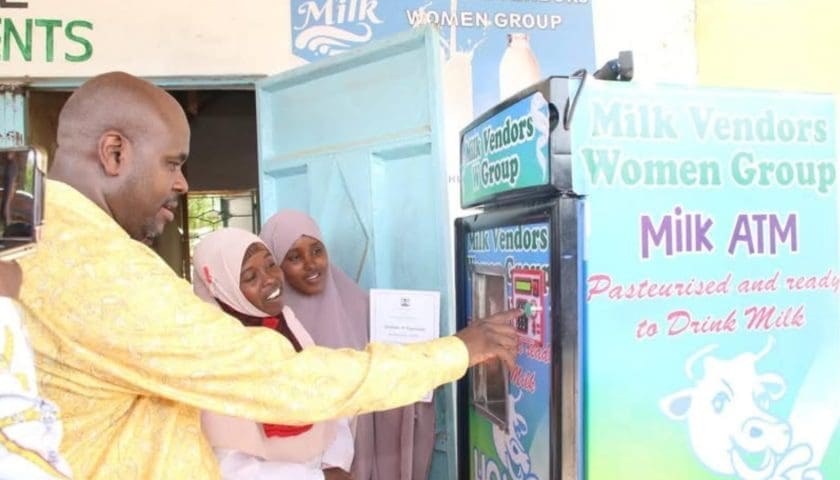
KENYA – Principal Secretary (PS) for the State Department for Cabinet Affairs, Idris Dokota, has commissioned two solar-powered milk coolers with a capacity of 1,000 litres each for Tana River cooperative societies to boost dairy farming.
The solar-powered milk, distributed under the Livestock Value Chain Support Project, targets small-scale producers and seeks to combat post-harvest losses and off-grid power challenges.
PS Dokota reiterated the National Government’s commitment to unlocking the economic potential of the livestock subsector through targeted policies and impactful programmes.
He said the initiative seeks to improve milk preservation, reduce post-harvest losses and increase incomes for dairy farmers in pastoralist communities.
“The initiative is expected to contribute to an increase in household incomes among targeted pastoralist communities, directly benefiting 600 farmers through improved preservation, value addition and expanded markets,” he said.
The two coolers will enable local farmers to aggregate up to 2,000 litres of milk daily valued at approximately Sh98,000.
Dr Dokota noted that consumers will benefit from improved food safety standards resulting from better milk preservation and reduced bacterial contamination, while a stable milk supply and improved quality will contribute significantly to household nutrition and food security.
“Bulk milk coolers are not merely storage facilities but are economic empowerment hubs capable of transforming milk into wealth, jobs, nutrition and opportunities for rural communities,” he said.
The dairy sector contributes 17% to agricultural GDP and about 3.8% to the national GDP, making it one of the largest agribusiness pillars in Kenya. Annual milk production was estimated at 5.76 billion liters in 2023, with cow milk accounting for 79% of total output.
The dairy industry is driven primarily by 1.8 million smallholder farmers, who produce nearly 80% of all milk. These farmers typically own 1–5 cows and achieve average yields of 7–9 litres per cow per day, though well-managed intensive systems can exceed 15–25 litres.
Most milk comes from high-performing regions in the Central Highlands and Rift Valley, including Kiambu, Nyeri, Meru, Nakuru, Uasin Gishu, and Nandi, which collectively produce over 80% of national milk.
Kenya’s dairy sector is anchored by several major players driving formal milk processing and branded product growth. Leading the pack is Githunguri Dairy Farmers Co‑operative Society—known for the “Fresha” brand active in central Kenya and leveraging strong small-holder networks.
Brookside Dairy Limited dominates retail with a broad product range and exports to East Africa. New Kenya Co‑operative Creameries stabilises supply through its powder and UHT systems.
Other noteworthy firms include Meru Dairy Processing Co. Ltd, Kinangop Dairy Farmers Cooperative Society, and Sameer Agriculture & Livestock Ltd.
Subscribe to receive our email newsletters with the latest news and insights from Africa, the Middle East and around the world. SUBSCRIBE HERE

Be the first to leave a comment