
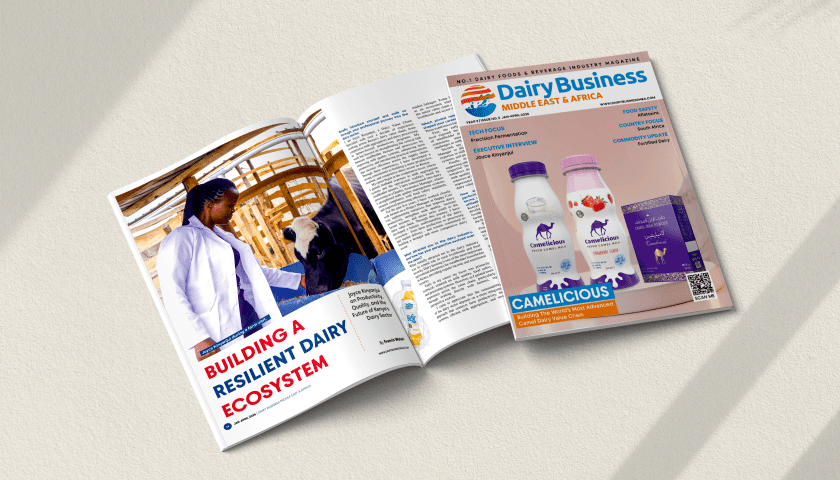
Building a Resilient Dairy Ecosystem: Joyce Kinyanjui on Productivity, Quality, and the Future of Kenya’s Dairy Sector
1. Briefly introduce yourself and walk us through your professional journey into the dairy sector?
I am Joyce Kinyanjui, a Dairy Value Chain Specialist with over a decade of experience working across Kenya’s dairy value chain, from cooperative milk aggregation and dairy processing to farmer-focused productivity programs.
My work has focused on strengthening the critical link between smallholder farmers and processors by improving milk quality systems, enhancing farm productivity, and introducing practical innovations that increase efficiency across the supply chain.
Through these experiences, I have developed a strong commitment to building a more productive, resilient, and competitive dairy sector in Kenya.
My career began at the cooperative level, where I gained firsthand exposure to milk aggregation systems and the operational realities faced by smallholder farmers.
I later transitioned into dairy processing as a Quality Assurance Manager, where I strengthened milk quality management systems, ensured compliance with food safety standards, and improved processing efficiency.
For the past five years, I have worked closely with farmers as a Project Manager at Happy Cow Ltd, implementing initiatives that improve dairy productivity, strengthen milk quality, increase farmer incomes, and attract more youth to the dairy value chain.
Through this journey, I have developed a holistic understanding of the dairy ecosystem – from farm production to processing and market delivery – and remain committed to building a stronger and more competitive dairy sector.
2. What attracted you to the dairy industry, and how has your perspective evolved over the years?
What initially attracted me to the dairy industry was its central role in rural livelihoods and food security. Dairy farming is one of the most important agricultural enterprises for smallholder households in Kenya, providing regular income and nutritional security.
Early in my career my focus was primarily technical, centered on milk quality, food safety, and processing systems. However, as I gained more experience across the value chain, particularly through working directly with farmers, my perspective evolved.
I came to appreciate that the sustainability of the dairy sector depends on a more integrated approach that connects farm productivity, feed systems, efficient milk aggregation, and strong market linkages.
Today I view the dairy industry as an ecosystem where improvements across the entire value chain can transform both farmer livelihoods and sector competitiveness.
3. Which pivotal roles or experiences most shaped your career in the dairy sector?
Three experiences have been particularly formative.
First, my early work at the cooperative level exposed me to the operational realities of smallholder dairy farming, including feed constraints, seasonal milk production, and milk handling challenges.
Second, my role as a Quality Assurance Manager in dairy processing strengthened my expertise in milk quality management, food safety systems, and processing efficiency.
Finally, my work as a Project Manager supporting smallholder farmers has been especially impactful. Through this role, I have implemented initiatives that improve productivity, strengthen milk quality systems, and introduce clean energy solutions at milk collection centers, reinforcing the importance of integrating improvements across the dairy value chain.
4. How would you assess the current performance of Kenya’s dairy sector in terms of production, processing capacity utilization, and formal market growth?
Kenya’s dairy sector remains one of the most developed in Africa and plays a critical role in rural livelihoods and national food security. Smallholder farmers dominate production and continue to be the backbone of the industry.
However, structural inefficiencies remain. Processing capacity has expanded considerably, yet many plants operate below optimal utilization due to seasonal milk supply fluctuations and the large share of milk traded through informal channels.
While the formal dairy market continues to grow, the informal sector still handles a substantial portion of marketed milk. Initiatives focused on strengthening farm productivity, improving milk aggregation systems, and enhancing quality assurance mechanisms will be key to unlocking the sector’s full potential.
5. From a structural standpoint, what reforms or policy interventions are urgently required to enhance competitiveness and attract long-term investment?
Stronger investment in feed systems and fodder development is critical to address one of the biggest constraints affecting dairy farmers, productivity.
Second, strengthening milk quality regulatory frameworks and enforcement will help build consumer confidence and encourage formal market growth.
Third, investment in dairy infrastructure, particularly milk collection centers, cooling systems, and rural logistics networks, would reduce post-harvest losses and improve supply chain efficiency.
Finally, policies that encourage private sector investment and innovation in dairy processing and value addition will be essential for enhancing competitiveness and expanding regional market opportunities.
6. How do informal markets influence quality standards, processor margins, and sector formalization?
The informal milk market plays a significant role in Kenya’s dairy economy due to its accessibility, flexible pricing structures, and strong consumer demand for raw milk.
However, informal trade often bypasses standardized testing and quality assurance systems, creating risks around food safety and quality consistency. It also places competitive pressure on formal processors who must operate under stricter regulatory requirements.
A sustainable approach lies in gradually formalizing milk trade through improved aggregation systems, stronger quality incentives, and farmer-friendly market structures.
7. In balancing farmer incomes, processor sustainability, and consumer affordability, what economic principles guide your decision-making?
Balancing these priorities requires improving efficiency across the entire value chain. The most sustainable way to increase farmer incomes is by improving farm productivity.
When farmers produce milk more efficiently through better feeding systems, improved genetics, and stronger herd management, their cost of production decreases and profitability improves.
At the same time, processors must focus on operational efficiency, cost management, and product diversification to remain competitive while delivering affordable products to consumers.
8. Feed has been one of the major challenges facing dairy farmers in the country. How is the challenge translating to farm-level production economics and milk supply stability?
Feed represents the largest cost component in dairy production and remains one of the most significant constraints affecting productivity.
During dry seasons, feed shortages reduce milk yields and create fluctuations in milk supply, directly affecting farmer incomes and processor capacity utilization.
Addressing this challenge requires investment in fodder production systems, improved forage conservation such as silage and hay making, and farmer training on balanced feeding strategies.
9. What opportunities and risks do you see for Kenya within regional dairy trade frameworks across East Africa?
Regional dairy markets present strong growth opportunities for Kenyan processors due to rising demand and expanding urban populations across East Africa.
Kenya’s relatively developed processing sector provides a competitive advantage in supplying value-added products such as UHT milk, yogurt, cheese and milk powder.
However, regional trade also presents challenges including regulatory differences, price competition, and occasional trade restrictions. Maintaining high product quality and efficiency will be essential for competitiveness.
To develop competitively, Kenyan processors must focus on three priorities: maintaining consistent product quality and international food safety standards, improving production efficiency through process optimization and technology adoption, and investing in product innovation and brand development to meet diverse consumer preferences across regional markets.
Happy Cow Model
10. How is Happy Cow working to improve farmer productivity, milk quality, and income stability?
Happy Cow works closely with farmers and cooperatives to strengthen the entire milk supply system by focusing on productivity improvement, milk quality management, and long-term farmer engagement.
Through farmer training programs and extension support, the company promotes improved feeding practices, better herd management, and proper milk handling techniques that enhance both productivity and milk quality.
Happy Cow Ltd is supporting cooperatives to mechanize farm operations, making fodder production more efficient and increasing land under cultivation.
By strengthening relationships with milk suppliers and supporting capacity development at the cooperative level, the company aims to build a more reliable and high-quality milk supply base.
Further, Happy Cow Ltd is supporting cooperatives to acquire climate resilient infrastructure – solar-powered instant milk coolers, with milk quality considerations.
12. What strategies has the company implemented to improve milk aggregation efficiency and minimize quality losses at collection centers?
Happy Cow Ltd works closely with milk collection centers to strengthen milk testing procedures, improve handling practices, and ensure timely transportation of milk from farms to the cooling centers and to the processing facility.
Happy Cow Ltd prides itself in being the pioneer of Quality Based Milk Payment System for the smallholder supply chain in Kenya, between 2015 and 2019.
This is a smart move that will ultimately transform the industry as it motivates farmers to produce more milk and of better quality. Consumers are looking for these premium quality dairy products.
In the recent past, Happy Cow Ltd has supported cooperatives with installation of solar-powered instant milk cooling facilities. This initiative addresses milk quality in a climate friendly way, lowering utility costs at cooperatives hence increasing incomes for farmers and minimizing post-harvest losses.
13. Seasonal milk fluctuations continue to challenge processor utilization rates. How does the company manage supply variability while maintaining market consistency?
Seasonal fluctuation in milk production is a common challenge across dairy-producing regions.
To mitigate these fluctuations, Happy Cow Ltd supports farm mechanization at cooperatives, and conducts farmers training. This ensures farmers are adopting improved feeding systems such as silage making and forage conservation practices that help stabilize milk production throughout the year.
Additionally, diversified product processing strategies enable Happy Cow Ltd to convert surplus milk during peak seasons into longer shelf-life products, helping maintain consistent market supply.
Leadership and Innovation
16. What strategic mindset shifts are necessary among dairy executives to future-proof Kenya’s dairy industry?
To future-proof Kenya’s dairy sector, industry leaders must adopt a more integrated and long-term strategic perspective.
This means prioritizing investments in farm productivity, strengthening aggregation infrastructure, and leveraging technology to improve efficiency across the value chain.
Executives must embrace innovation and data-driven decision-making while fostering stronger collaboration between farmers, cooperatives, processors, and policymakers.
17. From your experience in dairy project management, which initiative has delivered the most measurable impact across the value chain?
One of the initiatives I am most proud of has been supporting the introduction of clean energy solutions at milk collection centers while strengthening milk quality management systems.
By integrating energy-efficient cooling technologies with improved milk handling practices, we were able to significantly reduce milk spoilage, preserve milk quality, and improve the reliability of milk deliveries to processors.
This initiative not only improved operational efficiency for cooperatives and processors but also helped increase farmer confidence in organized milk collection systems.
Further, engaging in initiatives that attract more youth to dairy agribusiness has not only addressed the issue of youth unemployment but also ensured long-term industry sustainability.
19. Looking ahead, what structural changes will define the next phase of growth for Kenya’s dairy sector?
The next phase of growth in Kenya’s dairy sector will likely be driven by increased farm productivity, stronger aggregation systems, and greater investment in value addition.
Technological advancements such as improved dairy genetics, digital extension services, climate-resilient feed systems, expanded cold chain infrastructure and Quality Based Milk Payment Systems will play an important role in improving efficiency across the value chain.
At the same time, deeper regional market integration will create new opportunities for Kenyan processors to expand beyond domestic markets.
Subscribe to receive our email newsletters with the latest news and insights from Africa, the Middle East and around the world. SUBSCRIBE HERE

Be the first to leave a comment