
Milk production in Kenya hits 5.5MT in 2025 – National Bureau of Statistics reports
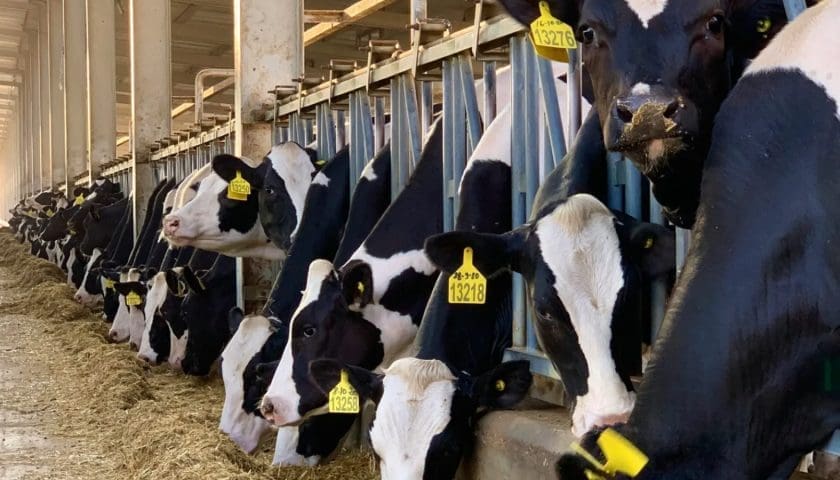
KENYA – Kenya’s fresh milk production hit 5.5 million tonnes in 2025, according to data compiled by the country’s National Bureau of Statistics (KNBS).
The announced stock represents a 3.5% increase compared to the previous year and marks a third consecutive year of rising milk production in the country. It also sets a new record for the sector.
Meanwhile, the processing segment is strengthening. According to the KNBS report, the volume of milk processed in the country in 2025 increased by 13.4% year on year to reach 701,500 tonnes.
As the government seeks to create favorable conditions to improve the competitiveness of local production, the sector’s performance is expected to grow further in the coming years.
It is with this in mind that Nairobi, for example, announced in October 2025 the immediate suspension of powdered milk imports to protect local producers from what it considers unfair competition.
In its 2024 report on the Kenyan dairy market, the US Department of Agriculture (USDA) indicated that the East African country had 32 active industrial dairies and 186 small processors, for a cumulative capacity of 3,750 tons per day.
Additionally, Kenya’s formal milk intake crossed 1 billion litres in 2025 for the first time, rising 11.5% to 1.014 billion litres from 909.0 million litres in 2024, according to industry data by the Kenya National Bureau of Statistics.
Eleven of twelve months in 2025 posted all-time highs, including months that once defined the low season. January opened at 90.4 million litres, while May peaked at 94.5 million litres, both far above earlier cycle highs. Even the weakest month stayed above 77.9 million litres, a level once seen only during peak flush periods.
December 2025 stood out as the lone pause. Intake slipped 3.6% year on year to 82.6 million litres from 85.7 million litres in December 2024. The pullback followed an unusually strong close to 2024 and did not change the annual outcome, pointing to a modest correction rather than fading momentum.
Behind the surge sits a mix of policy, pricing, and infrastructure changes. Programmes such as MoreMilk 2, led by the Kenya Dairy Board with development partners, focus on quality, safety, and compliance among informal traders in key dairy counties.
Proposed dairy and livestock reforms aim to tighten oversight, expand cooling and bulking capacity, and cut losses along the supply chain.
Processors expanded collection networks and offered more predictable payouts, giving farmers stronger incentives to deliver milk to factories instead of informal markets.
Improved rainfall supported yields, yet the persistence of higher volumes during weak months signals deeper formalisation rather than a short-term weather lift. Rising urban demand and institutional buyers helped absorb the additional supply.
To receive our email newsletters with the latest news and insights from Africa, the Middle East and around the world, SUBSCRIBE HERE

Be the first to leave a comment