
Kitulo Farm identified as strategic breeding hub to drive Tanzania’s dairy growth
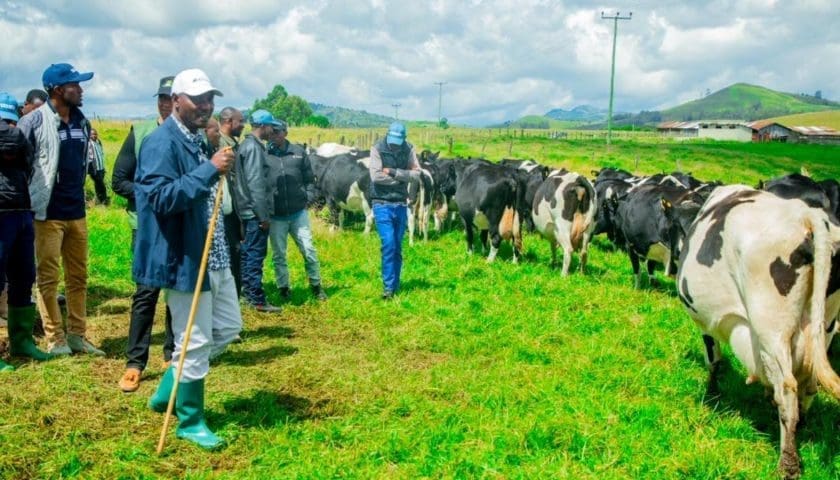
TANZANIA – The government of Tanzania has stepped up efforts to expand milk production capacity, with the Kitulo Livestock Farm identified as a strategic centre for breeding high-quality dairy cattle to meet rising national demand.
Spanning about 4,875.6 hectares, the Kitulo Livestock Farm currently holds around 1,500 cattle.
Still, it can accommodate up to 4,500, positioning it as a key driver in efforts to boost Tanzania’s dairy production and reduce reliance on imported breeding stock.
Minister for Livestock and Fisheries, Bashiru Ally Kakurwa, said the country is experiencing a growing demand for milk, making it necessary to scale up investment in dairy farming, particularly in the production of improved cattle breeds.
The minister noted that although awareness of modern livestock keeping is increasing among farmers, the availability of improved dairy breeds remains limited.
He said the dairy sector continues to attract interest due to strong market demand, but production is still below required levels, largely due to shortages of quality breeding stock.
“Farmers are increasingly embracing modern livestock practices, and the response is encouraging. However, the demand for improved dairy breeds is still far higher than what we are currently producing locally,” he said, noting that many farmers are forced to source breeding stock from Zambia, Kenya and South Africa.
To address the gap, the minister directed the Ministry’s Directorate of Production and Marketing Development to ensure that about 3,000 dairy cattle are supplied to the farm under the Dairy Industry Transformation and Climate Change Project.
The initiative is expected to significantly increase production and strengthen local access to improved breeds.
Deputy Permanent Secretary for Livestock, Fabian Madele, speaking on behalf of the Permanent Secretary, said achieving the government’s objectives in the livestock sector will depend on strong collaboration among experts and stakeholders, especially in addressing operational challenges facing the farm.
Tanzania’s dairy sector produces 3.5 billion litres annually (2024 est.), of which 75% are from smallholder farms. The milk demand grows 5-7% yearly due to urbanization and rising incomes, per FAO data.
There are 25 million cattle (the world’s 12th largest herd), but yield averages just 2-3 litres/cow/day vs global 6-10 litres—huge efficiency gap. Imports hit $100M+ yearly for milk powder.
Despite a massive livestock population, Tanzania relies on imports due to quality issues, poor infrastructure, and limited farmer training. Bridging these gaps builds trust in local milk, enhances nutrition, and powers the domestic dairy market.
To receive our email newsletters with the latest news and insights from Africa, the Middle East and around the world, SUBSCRIBE HERE

Be the first to leave a comment