
UAE dairy market size to reach US$7.3B by 2034 – IMARC Group reports
The UAE has experienced rapid population growth in recent years, which is a significant driver for increased demand in various sectors, including dairy.
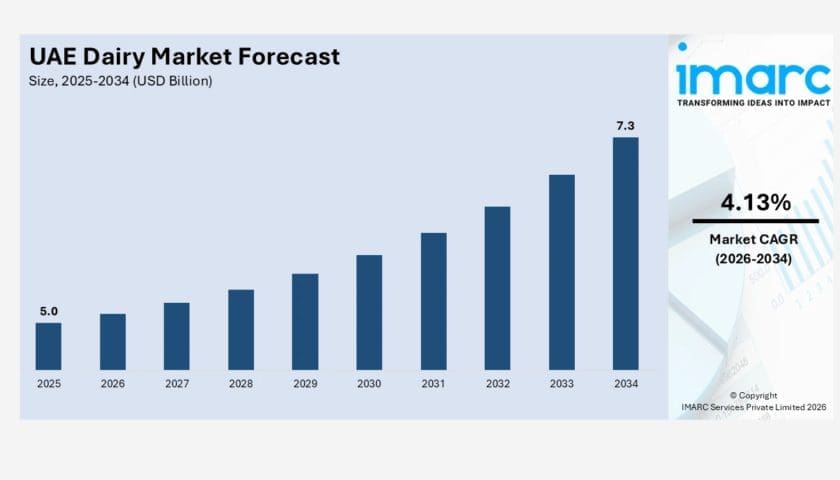
UAE – The UAE dairy market size was valued at US$5 billion in 2025 and is expected to reach US$7.3 billion by 2034, exhibiting a CAGR of 4.13% from 2026 to 2034, according to IMARC Group.
The rising population and urbanization in the country, evolving consumer dietary habits, increasing health consciousness among people, ongoing product innovation in the dairy sector, and the implementation of supportive government policies are some of the factors pushing the market forward.
As of 2023, the country’s population is 10.17 million, with a notable percentage of expatriates (88.5%). Urbanization trends have led to more families and individuals in urban centers, such as Dubai and Abu Dhabi, where dairy consumption is more frequent due to lifestyle habits.
UAE dairy market trends
Increasing demand for organic dairy products
With rising health and environmental consciousness among consumers, there is an increase in preference for dairy products free of artificial additives, hormones, and pesticides.
This trend is particularly noticeable among younger, wealthy consumers who are willing to spend more on organic choices that align with their sustainability and natural-lifestyle principles.
As a result, dairy companies are focusing on organic product ranges to meet this changing consumer demand. In 2025, Meliha, a dairy brand owned by Sharjah’s Department of Agriculture and Livestock, launched a new organic laban product in response to rising demand for organic dairy in the UAE.
Technological advancements in dairy production
Innovations in dairy production technology are bolstering the market growth by improving efficiency and boosting product quality.
Contemporary dairy farming practices, including automated milking and enhanced feed management systems, are greatly improving production capacity while lowering operational expenses.
Furthermore, improvements in dairy processing, including ultrafiltration and advanced fermentation techniques, are enabling the development of innovative, targeted products that appeal to health-oriented consumers.
These advancements help ensure that dairy products meet elevated safety and nutritional standards, which is essential for preserving consumer confidence.
The implementation of advanced packaging technologies are also helping in extending shelf life and enhancing product preservation, enabling dairy items to reach a wider user group throughout the UAE.
Government support and strategic initiatives
Government support and strategic initiatives are driving market growth by fostering innovation, enhancing local production capabilities, and ensuring sustainability, thereby boosting both domestic supply and consumer confidence in the industry.
The government’s emphasis on bolstering local production abilities and decreasing dependence on imports is creating a favorable atmosphere for growth in the dairy sector.
Measures designed to guarantee food security, like grants for local dairy producers and funding for sustainable farming methods, are further strengthening local production.
In addition, several efforts aimed at enhancing the overall supply chain framework, ranging from agricultural methods to logistics systems, are resulting in a more effective dairy market.
UAE dairy market growth drivers
Changing consumer preferences and lifestyle shifts
Consumers in the UAE are increasingly selective, showing a clear shift towards products that suit their dynamic, fast-paced lifestyles.
This change reflects a preference for convenience, like ready-to-drink (RTE) dairy products and single-serve containers, simplifying the incorporation of dairy into consumers’ everyday lives.
Furthermore, the growing inclination towards specialized dairy items, such as probiotic-enriched yogurts and functional milk drinks, showcases the rising demand for products that address particular health requirements.
Expansion of retail and distribution channels
As urbanization rises and modern retail spaces expand, dairy products are now more available to consumers in different areas of the UAE. Supermarkets, hypermarkets, and convenience stores are emerging as the main sales venues, enabling dairy brands to connect with a wider audience.
The rise of e-commerce and online shopping platforms is further supporting market growth by providing consumers the ease of buying dairy products from their homes.
In 2024, Lifeway Foods announced an expanded distribution agreement for its probiotic kefir and farmer cheese in the UAE market.
The products, including 32oz Lifeway Kefir and Lactose-Free flavors, began shipping in the fourth quarter of 2024 and was available across supermarkets in Dubai and the Emirates.
Growing focus on sustainability and eco-friendly practices
As consumers and producers alike prioritise minimising the ecological footprint of dairy production, sustainability and environmentally friendly methods are progressively influencing the UAE dairy market.
Rising concerns about climate change and the environment are driving a preference for dairy brands that highlight sustainable sourcing and production practices.
Shoppers are becoming more aware of the ecological impact of the goods they buy, insisting on dairy products made with little application of pesticides, hormones, and other detrimental substances.
In reply, dairy farmers are implementing sustainable methods like energy-efficient agriculture, minimizing waste, and conserving water.
Additionally, the need for eco-friendly packaging solutions, including recyclable substances and minimized plastic usage, is increasing.
With the UAE government actively supporting sustainability initiatives, dairy producers are adapting to these efforts to attract eco-friendly consumers, thus strengthening the market growth.
UAE dairy industry segmentation
Liquid milk is one of the largest segments in the UAE dairy market. It is widely consumed for its convenience, nutritional value, and versatility.
Flavored milk has gained popularity in the UAE for its taste and appeal among children and adults. Popular flavors include chocolate, strawberry, and vanilla.
Cream is an important ingredient in most culinary uses, whether for cooking, baking, or dessert preparation. The demand for cream in the UAE is rising as the country’s food and beverage industry thrives.
Cheese is one of the fastest-growing segments within the UAE dairy market. Growing international influence on domestic food is attributed to diversifying preferences for various varieties of cheese, including mozzarella, cheddar, and feta.
Yoghurt is a highly versatile and popular dairy product in the UAE, particularly consumed for breakfast, snacks, and desserts. The demand for Greek yoghurt, probiotic, and low-fat options is increasing as consumers seek functional foods that contribute to digestive health and overall wellness.
Anhydrous milk fat is a concentration form of butterfat with the demand of this application because of the versatility required for food processing, most notably in the baking area, confectionery production, and other dairy processing applications.
Skimmed milk powder is widely used in the production of dairy products, including beverages, confectionery, and bakery items. The demand for low-fat and calorie-conscious products has been fueling the popularity of SMP, as it offers the benefits of milk without the fat content.
Whole milk powder is widely used in all food and beverages, from dairy products, to baked goods and desserts. It is highly valued for its convenience, extended shelf life, and ability to be reconstituted into liquid milk.
Whey protein has recently gained immense popularity in the UAE for its high protein content, particularly among fitness enthusiasts and others engaged in physical and health-related workouts. It has numerous applications in protein supplement shakes, nutritional drinks, and energy bars.
Lactose powder is used in food processing, infant formula, and pharmaceutical products, and is primarily consumed by people without lactose intolerance; hence, demand can be attributed to the developing functional food sector.
Regional analysis
Dubai, as the economic and cultural hub of the UAE, is a prominent dairy market with one of the highest demands across various segments.
The city’s diverse population, including a large expatriate community, fuels the demand for a wide variety of dairy products.
Dubai’s thriving retail sector, along with a booming hospitality industry, drives substantial consumption of dairy products such as flavored milk, cheese, yogurt, and ice cream. The city’s strong focus on health and wellness also influences dairy preferences.
Abu Dhabi, the capital of the UAE, holds a significant share of the dairy market, driven by its wealth, government initiatives, and large population.
With a high standard of living and growing health consciousness, consumers in Abu Dhabi are increasingly opting for premium dairy products like organic milk, yogurt, and cheese.
The region’s robust infrastructure and emphasis on food security further contribute to the market’s expansion, with local production and sustainable practices gaining traction.
Sharjah’s dairy market has been growing steadily, supported by its expanding population and economic diversification. As the third-largest emirate, Sharjah has seen increased consumption of dairy products, especially in household and retail segments.
To receive our email newsletters with the latest news and insights from Africa, the Middle East and around the world, SUBSCRIBE HERE.
Be the first to leave a comment