
3D-printed biosensor for early detection of subclinical mastitis in dairy cattle
The research team is now trying to improve the long-term durability of the nanomaterial coatings of the sensor and develop portable signal readers suitable for farm conditions.
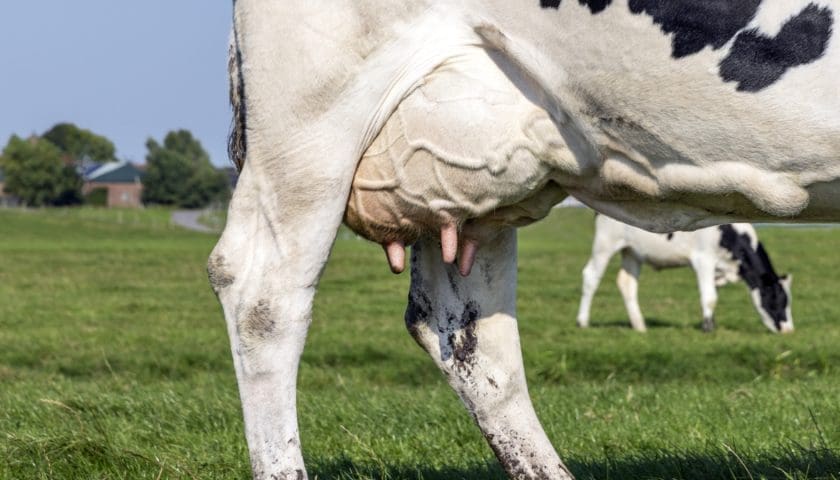
USA – Subclinical mastitis, a disease affecting cattle, has detrimental effects for dairy farming worldwide, causing billions of dollars in losses each year globally. Unlike clinical mastitis, which can be spotted from symptoms such as swelling udders and visibly abnormal milk, subclinical mastitis cases are not easily detectable.
Dr. Azahar Ali, Assistant Professor in the School of Animal Sciences at Virginia Tech, said that subclinical mastitis costs dairy farmers millions each year because it often goes undetected until serious damage has already occurred.
“Cows appear healthy, their milk seems fine, but an underlying infection is slowly affecting both milk quality and the animals’ health. Conventional laboratory tests such as the California Mastitis Test take too long: significant damage may have already been done by the time cases are confirmed.”
Dr. Ali and his co-workers are tackling this challenge. Their technology turns milk itself into a real-time diagnostic sample, allowing farmers to assess udder health directly on the farm within minutes instead of waiting days for laboratory results.”
They have developed a coin-sized device called 2.5D MiSENSE (Microarchitected Sensing Electrode). This innovative sensor utilizes a cost-effective, stereolithography-printed microstructure, which is coated with a special biomarker.
The biomarker (antibody) can identify even trace amounts of N-acetyl-β-D-glucosaminidase (NAG – an enzyme indicator for udder inflammation) in raw milk samples within minutes.
This sensitivity allows it to pick up NAG at concentrations that signal the very early stages of subclinical mastitis, enabling intervention before the disease advances.
“What’s exciting is that we achieved high-performance biosensing without expensive cleanrooms,” said Matin Ataei Kachouei, a PhD student at Virginia Tech and co-author of the study.
“By combining 3D-printed microstructured electrodes with MXene nanomaterials and machine learning, we created a low-cost platform that delivers laboratory-level sensitivity in real-world conditions.”
The device achieves its high sensitivity through microscale engineering. Its surface is designed with a landscape of tiny ridges and pyramidal features, each just 80 micrometres across.
The surfaces feature µ-pine-stripe structures that lie between 2D and 3D geometries, creating a unique “2.5D” architecture. The controlled surface relief in the vertical dimension increases the active sensing area and signal transduction.
The ridge pattern also channels molecular motion towards the sensing interface via spherical diffusion, enabling faster detection.
The sensor’s microstructures are coated with MXenes, which serve as oxygen-free electrocatalysts and support materials for immobilizing the biomarker.
Due to the complex composition of raw milk and negligible amount of NAG, the sensor needs to identify the NAG signal pattern against scores of background noise.
For this, machine learning algorithms are employed, to enhance the sensor’s accuracy. This allows the device to reliably distinguish between healthy cows and infected ones, even using unprocessed milk samples.
Looking further ahead, large-scale field trials across diverse dairy herds, integration with automated milking systems for continuous monitoring, and expansion to detect multiple health biomarkers simultaneously will make this device a complete, commercial product.
Subscribe to receive our email newsletters with the latest news and insights from Africa, the Middle East and around the world. SUBSCRIBE HERE


Be the first to leave a comment