
Sultana unveils new soap-shaped ice cream bar
The brand has emphasized that the product is entirely edible and safe, with packaging clearly marked to avoid any confusion.
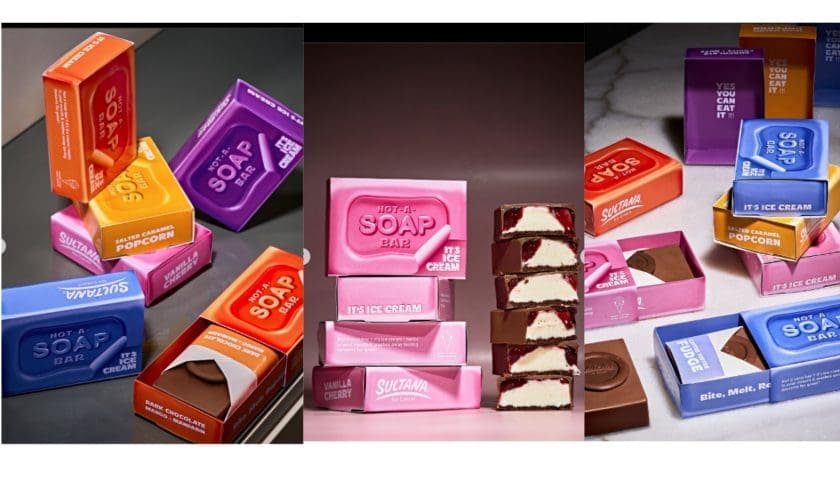
EGYPT – Sultana, an ice cream brand, has launched a soap-shaped ice cream bar, a creamy indulgence called “Not a Soap Bar”, expanding its product range.
The new bar, which mimics the classic rectangular shape of a bar of soap, complete with embossed branding and pastel hues, is part of Sultana’s latest campaign to challenge conventional dessert aesthetics.
According to the company, the idea was born from a desire to blend nostalgia, humor, and sensory surprise, offering consumers a treat that’s as fun to look at as it is to eat.
Despite its unconventional appearance, the bar is crafted with Sultana’s signature creamy base, available in flavours such as lavender vanilla, citrus burst, and mint cream—each chosen to complement the visual illusion while delivering a refreshing taste.
Sultana’s soap-shaped ice cream bar is now available in select stores and online, with plans to expand distribution based on demand.
Ice cream consumption rises as climate change alters food trends
Recently, ice cream consumption has seen a marked increase in recent years, as rising global temperatures push consumers away from traditional hot foods like soup and toward cooling, refreshing treats.
According to a report by ING, this shift in eating habits is particularly evident in southern Europe, where unusually high temperatures are changing the seasonal patterns of food consumption.
The data reveals that while soup was once a staple during colder months, it is now steadily declining, while ice cream sales continue to rise, even in traditionally colder periods.
The report, based on 25 years of monthly data from Spanish household consumption, highlights a clear trend: as temperatures increase, soup consumption per capita has dropped, while ice cream consumption has grown.
This pattern is especially noticeable when temperature data for each month is compared with sales figures. The report notes that soup sales tend to drop significantly during warmer-than-expected months, while ice cream sales surge during the same periods.
Interestingly, the rise in ice cream consumption is not confined to the hot summer months. The report also shows that colder months such as February and November have experienced some of the strongest growth rates in ice cream sales.
“We observe shifts in how much households consume each month,” the report states. “Ice cream consumption has increased every month, with colder months, traditionally associated with warm foods, now showing the strongest growth rates.”
Subscribe to receive our email newsletters with the latest news and insights from Africa, the Middle East and around the world. SUBSCRIBE HERE


Be the first to leave a comment