
Rwanda’s Dairy Industry: Transforms From Subsistence to Formal Structure
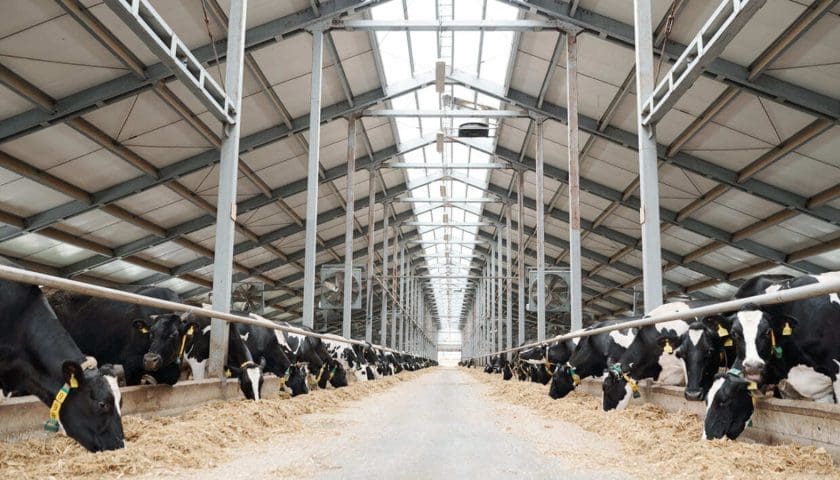
RWANDA – Rwanda’s dairy industry serves as a clear example of agricultural transformation in East Africa, having evolved over the last two decades from subsistence level production into a structured agri-industrial sector with national and regional ambitions.
Guided by strategic interventions from the Ministry of Agriculture and Animal Resources (MINAGRI), supported by donor financing and private investment, the sector has experienced remarkable growth: national milk production has risen from approximately 121,400 litres in the mid-2000s to more than one million tonnes in 2022/23.
According to the International Livestock Research Institute (ILRI), dairy contributes 6% to Rwanda’s GDP, supporting over 100,000 households and employing a significant portion of the population engaged in agriculture, which accounts for approximately 70% of the population.
Projections for 2025/26 estimate output could reach 1.2 million tonnes, driven by advances in breeding, cooperative systems, and processing capacity, though climate variability remains a persistent challenge.
Meanwhile, commercial prospects continue to expand, with Statista forecasting dairy market revenues of US$90.18 million in 2025 and a compound annual growth rate of 10.40% through 2030.
Such figures point not only to rising domestic consumption but also to growing opportunities in export and regional trade.
PACKAGED MILK BECOMES CENTRAL TO URBAN CONSUMPTION TRENDS
Rwanda’s UHT and packaged pasteurised milk segments have expanded rapidly over the last decade, reflecting both rising urban demand and heavy investment in processing capacity.
According to the Ministry of Agriculture and Animal Resources (MINAGRI), national milk production surpassed 1,000,000 tonnes in 2022/23, of which approximately 81 million litres were delivered to formal processors for pasteurisation and UHT packaging.
MINAGRI further reports that per-capita milk consumption rose from 20 litres per person in 2006 to nearly 78 litres per person by 2022, highlighting the sector’s role in meeting national nutrition targets. Public nutrition programmes also favour UHT milk for its shelf stability, with the International Livestock Research Institute (ILRI) noting its integration into school feeding and stunting-reduction campaigns.
Industry leaders have driven innovation. Inyange Industries, Rwanda’s dominant processor, partnered with Tetra Pak to introduce aseptic packaging and launched fortified long-life milk products.
In addition, the opening of the Nyagatare powdered milk and UHT plant in 2022 expanded capacity to process hundreds of thousands of litres per day, reducing reliance on imported milk powder and stabilizing output during seasonal fluctuations.
YOGHURT EMERGES AS A KEY VALUE-ADDED PRODUCT
Yogurt in Rwanda has evolved from a niche product to one of the most dynamic value-added dairy categories, driven by both industrial processors and farmer cooperatives.
According to the Ministry of Agriculture and Animal Resources (MINAGRI), Rwanda’s total milk production surpassed one million tonnes in 2022/23, creating a significant raw material base for processing into products like yogurt.
Among private-sector leaders, Inyange Industries, the country’s largest processor, produces a wide range of pasteurized and flavored yogurts, accounting for the bulk of supermarket supply. Its distribution extends into Uganda, Burundi, and the DRC.
According to Statista, the yogurt market in Rwanda is projected to generate US$1.07 million in revenue in 2025, with a modest compound annual growth rate (CAGR) of 1.18% through 2029, reaching US $1.13 million by then.
At the cooperative level, beyond Nyagatare, organizations such as Gishwati Milk Producers Cooperative (Western Province) and Musanze Dairy Cooperative (Northern Province) have invested in small-scale yogurt processing units supported by the Rwanda Dairy Development Project (RDDP) and development partners like Heifer International and SNV Netherlands Development Organisation.
STRATEGIC INVESTMENTS IN MILK POWDER AIM TO BALANCE SUPPLY
Milk powder has rapidly evolved into one of the most strategically significant segments of Rwanda’s dairy value chain, serving as both an industrial buffer for seasonal supply and a substitute for expensive imports.
According to the Ministry of Agriculture and Animal Resources (MINAGRI), Rwanda’s total milk production surpassed one million tonnes in the 2022/23 fiscal year; yet, only roughly 8% of that, approximately 81 million litres, was delivered to processing facilities, highlighting a critical need for value-adding infrastructure to absorb the surplus.
This need catalysed the commissioning of the country’s first milk powder processing plant in Nyagatare by Inyange Industries, with a capacity of 650,000 litres of raw milk per day, generating approximately 41 tonnes of milk powder, 25.6 tonnes of butter, and 11.3 tonnes of ghee daily.
International trade data from Trendeconomy shows that Rwanda imported approximately US $21 million worth of dairy powders in 2022, marking a 63% increase over the previous year and underscoring its heavy reliance on imports.
On the export front, FAOSTAT reports that Rwanda shipped 649,910 kg of milk powder, valued at US$2.39 million, in 2022, a modest yet significant contribution to export diversification.
A development signaling import substitution is the recent industrial agreement between Inyange Industries and Africa Improved Foods (AIF): AIF previously imported about 3,000 tonnes of milk powder annually, but has now begun sourcing from Inyange to bring production in-country, beginning with an initial 50 tonnes and aiming to scale to the full 3,000 tonnes per year.
CHEESE MARKET GROWS GRADUALLY WHILE BUTTER AND GHEE SCALE UP
Cheese is a small but growing segment in Rwanda’s dairy sector. MINAGRI reports that milk production in 2022/23 exceeded one million tonnes, with about 3,000 tonnes processed into cheese annually.
UN Comtrade data show 34.7 tonnes imported in 2022 and 27.8 tonnes exported. Statista projects cheese market revenue at US $1.10 million in 2025, with a 1.35% CAGR through 2030 and 0.6% consumer penetration.
Cooperatives like Ingabo Dairy process approximately 2,500 liters of milk daily for cheese, aiming to reach 5,000 liters, which indicates potential for domestic consumption and import substitution.
Butter is expanding, driven by consumer and industrial demand. Of one million tonnes of milk produced in 2022/23, ~8% is processed, with butter on a smaller scale.
UN Comtrade reports 15.2 tonnes imported in 2022 (US$118,000), with negligible exports. Inyange’s Nyagatare plant can produce 25.6 tonnes of butter daily. Statista forecasts the butter market at US $4.6 million in 2025, with a 5.36% CAGR through 2030.
Cooperatives produce traditional ghee, while Inyange leads the packaged butter market in urban areas, supporting import substitution and growth.
DISTRIBUTION AND LOGISTICS AT THE CORE OF DAIRY ACCESS
Industrial Processors and Cooperatives Drive Product Supply The strength of Rwanda’s dairy sector increasingly rests on the systems that process, preserve, and move milk products across the country and into regional markets.
At the industrial end, Inyange Industries dominates as the flagship processor, with large-scale plants in Kigali and Nyagatare producing UHT milk, yogurt, butter, ghee, and milk powder.
Alongside this, a growing number of cooperatives and medium-scale enterprises, such as Nyagatare Dairy, Gishwati Dairy Cooperative, and Ingabo Dairy, operate smaller processing facilities, often focusing on yogurt, fermented milk, and cheese for local markets.
COLD-CHAIN INFRASTRUCTURE REMAINS A PERSISTENT BOTTLENECK
The effectiveness of these plants depends heavily on cold-chain logistics.
According to the International Livestock Research Institute (ILRI), fewer than 40% of collected volumes are chilled to standard before processing, meaning quality losses remain a recurring challenge.
To address this, Rwanda has established a network of milk collection centres (MCCs), now numbering over 120, equipped with chilling tanks and storage units, many of which were financed under the Rwanda Dairy Development Project (RDDP) with support from the World Bank and donors.
PACKAGING INNOVATIONS EXTEND SHELF LIFE AND MARKET REACH
Packaging technologies, especially aseptic cartons for UHT milk and PET bottles for yogurt, have helped extend shelf life and expand reach, making it possible for processors like Inyange to compete in regional markets such as Uganda, Burundi, and the Democratic Republic of Congo.
This integration of processing capacity, cold-chain logistics, and modern packaging is gradually reshaping Rwanda’s dairy landscape from a fragmented local trade into a structured agri-industrial system with regional ambitions
NATIONAL STRATEGIES AND STANDARDS PROVIDE STRUCTURE AND MARKET ALIGNMENT
National Dairy Strategy Provides Roadmap for Growth Rwanda’s dairy sector is governed by a coordinated institutional architecture and a set of national frameworks that collectively steer production, quality assurance, market development and risk management; at the centre is the National Dairy Strategy, which MINAGRI has endorsed as the country’s roadmap for scaling production, improving quality, and promoting value addition, and which the Rwanda National Dairy Board (RNDB) helps to operationalise under the oversight of MINAGRI and the Ministry of Trade and Industry (MINICOM).
Institutions Anchor Standards and Certification
Research and extension functions are provided by the Rwanda Agriculture Board (RAB), while Rwanda Agriculture and Livestock Inspection and Certification Services (RALIS) enforces on-farm and milk-handling standards through inspection and certification programmes that feed into national conformity systems; the Rwanda Standards Board (RSB) issues the technical standards for milk and milk products, runs certification schemes aligned with Codex and ISO requirements, and has implemented the Zamukana Ubuziranenge (ZU) support programme to help agro-processors meet those standards and access regional markets.
Rwanda Dairy Development Project Strengthens Infrastructure and Cooperatives
The Rwanda Dairy Development Project (RDDP), financed and supported by partners including the World Bank, IFAD and development organisations, acts as the principal investment and implementation vehicle for infrastructure (notably milk collection centres and chilling capacity), cooperative strengthening and market linkages, and MINAGRI’s animal resources directorate coordinates complementary initiatives such as Girinka (One Cow per Poor Family), school-feeding nutrition programmes and genetics and extension interventions.
PRODUCTIVITY GAPS REMAIN KEY BARRIERS TO GROWTH: Cold-Chain Gaps and Informal Markets Persis
This structural limitation is compounded by the uneven reach of cold-chain infrastructure. The Rwanda Dairy Development Project (RDDP) has supported the establishment of over 120 milk collection centers.
However, the International Livestock Research Institute (ILRI) notes that less than 40 percent of marketed milk is chilled or quality-tested before processing, indicating that spoilage, bacterial contamination, and loss of value remain persistent risks.
As a result, the informal market still dominates, absorbing more than 60 percent of the marketed milk, leaving processors like Inyange Industries underutilizing their installed capacity.
Weak Compliance Undermines Quality Standards
Policy enforcement presents another layer of constraint: although the Rwanda Standards Board (RSB) has introduced certification schemes such as the Seal of Quality (SOQ) and the S-Mark, compliance among smallholder producers and informal traders is uneven, undermining the credibility of formal certification systems.
RWANDA CHARTS THE PATH FOR LONG-TERM DAIRY GROWTH
With a rise in per capita consumption, a widening demand gap presents an opportunity for processors and cooperatives to expand their supply of safe, packaged milk and diversify into value-added products, such as yogurts, cheese, and fortified milk powders, that cater to Rwanda’s growing middle class.
Regional Integration Unlocks Export Potential
Regionally, Rwanda’s membership in the East African Community (EAC) and the African Continental Free Trade Area (AfCFTA) offers a platform for competitive exports into neighbouring markets where dairy deficits persist; with proper certification under RSB’s ISO 22000 and HACCP frameworks, Rwandan dairy products are already positioned to access Uganda, Burundi, and the DRC, with potential expansion into broader COMESA markets.
Innovation in Genetics, Feed, and Climate-Smart Systems
At the production level, opportunities for genetic improvement, feed innovation, and climate-smart livestock management are emerging, particularly through collaborations with the Rwanda Agriculture Board (RAB) and international partners such as ILRI and IFAD.
The expansion of cold-chain logistics and digital traceability systems could also unlock efficiency, reducing post harvest losses while strengthening consumer confidence in formal supply channels.
Infrastructure and Policy Back Expansion
On the policy front, the rollout of the Rwanda Dairy Development Project (RDDP II), valued at Rwf 127 billion, offers a strategic vehicle to deepen cooperative capacity, expand milk collection infrastructure, and incentivize private investment across the value chain.
Equally, the government’s design of a livestock insurance scheme in partnership with MINECOFIN and private insurers could address systemic risks, making dairy farming more attractive to commercial lenders and investors.
Subscribe to receive our email newsletters with the latest news and insights from Africa, the Middle East and around the world. SUBSCRIBE HERE

Be the first to leave a comment