
Storing donor breast milk longer raises risk for premature baby diseases – study finds
Human breast milk is particularly essential for infants with specific medical conditions, such as low blood sugar, congenital heart disease, and immunologic deficiencies.
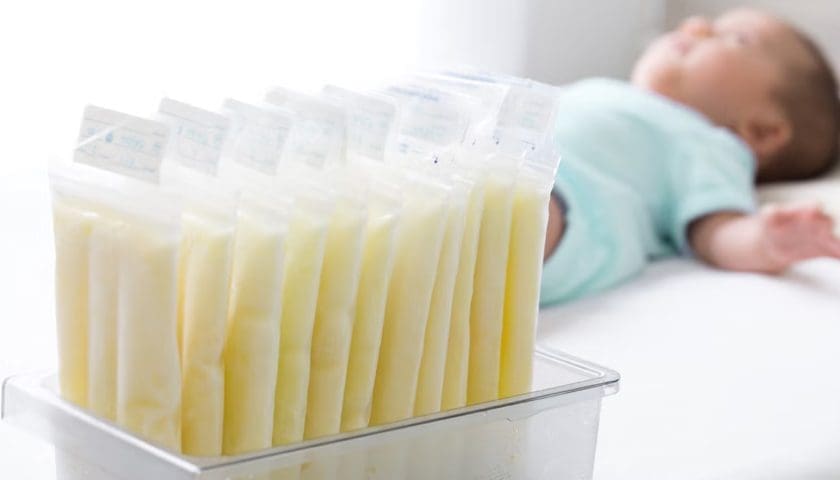
USA – According to the US Medical University of South Carolina (MUSC), shorter storage durations of donor human milk may reduce gastrointestinal complications in premature infants, including necrotizing enterocolitis, according to new research.
Minimizing milk storage time may help preserve protective properties that are critical for preterm gut health.
The researchers believe their findings may necessitate updated WHO and CDC guidance, as both currently advise that frozen milk can be stored safely for up to a year for all babies.
“Our results showed that babies weren’t as protected with the use of donor milk that was stored for a longer time as with donor milk that was stored for shorter periods of time,” said lead study author, neonatalist Katherine Chetta, M.D., from the US Medical University of South Carolina (MUSC).
Essential lifeline
Donor human milk is a vital substance for almost all preterm babies when their own mother’s milk is unavailable, in short supply, or unsafe.
Feeding with breast milk reduces complications associated with formula, while supporting immune function and digestion.
One of the most significant benefits of donor milk is reducing the risk of necrotizing enterocolitis (NEC).
This severe inflammatory disease affects mainly preemies and can lead to bowel tissue dying. It requires medication and often surgery and can lead to lifelong complications.
Chetta collaborates closely with the nutrition management center, or “milk room,” at the Medical University of South Carolina, where the donor milk is stored.
Based on previous studies and detailed analysis of the milk, Chetta and her team knew that longer storage times mean a breakdown in the action and efficacy of specific milk components.
While medical researchers have not yet identified the sole cause of NEC, they have posited that several connected factors can injure the premature gut, allowing bacteria in and creating inflammation.
This led to the researchers to ask whether aging milk is less protective against the development of NEC than fresher milk.
Dangers of longer milk storage
At the MUSC Shawn Jenkins Children’s Hospital, Chetta has long dealt with the devastating effects of NEC in her patients.
“It’s one of those key benchmark diseases that all NICUs are constantly trying to decrease,” she noted.
Chetta reviewed the medical records of 262 very-low-birth-weight, less than 3.3 lb, infants who were provided donor milk in the NICU at the MUSC Shawn Jenkins Children’s Hospital between February 2022 and January 2024.
Among those premature babies, 226 remained free of disease while 36 developed NEC or another gut disease called spontaneous perforation, which also causes tremendous damage to intestinal tissue.
Chetta’s findings revealed that every extra day of storage increased the risk of NEC in very-low-birth-weight preemies by 3.7%. Her team notes that the “sweet spot” for frozen milk storage was approximately 240 days for the tiniest infants.
Laboratory results revealed that specific milk components degrade even while in frozen storage over time.
“When preemies are on the edge of viability, and extremely low birth weight, that’s when they seem to be the most susceptible to the effects of storage and can be most protected by having fresher milk,” said Chetta. “
Need for reevaluating WHO guidelines
Based on these findings, Chetta and her team believe that world health guidelines need to be reevaluated, especially regarding critically ill babies. The discovery has already influenced clinical practice in Chetta’s NICU.
“We’re so convinced that we need a little bit fresher that we’re already doing it just to be on the safer side,” said Chetta. “That’s how much we believe in it.”
The researchers caution that this doesn’t mean discarding or wasting milk that is not relatively fresh. Instead, they urge the use of fresh milk more quickly and the optimization of freezing and storage procedures so that the sickest and youngest babies can access the freshest milk.
Subscribe to receive our email newsletters with the latest news and insights from Africa, Middle East and around the world. SUBSCRIBE HERE


Be the first to leave a comment